Friday, April 1, 2016

Trail Volunteer Work Day

Stone State Park
 
Trail Volunteer Day
 
Saturday, Apr. 30, 2016
 
8 A.M. to 12 P.M. and 1 P.M to 4 P.M.
 
Come enjoy a beautiful spring day at Stone State Park and help maintain our multi-use trails!  We will meet at the Wahkaw Shelter to clear trails, dig drains, and any other trail maintenance that needs to be done.
 
Children 12 years and younger are welcome but need to be accompanied by a parent or guardian.  Anyone planning on attending, please call the office or e-mail Ryan McPherren with the time in which you will be attending.
 
Please bring water, gloves, sunscreen, sturdy shoes, and work clothes.  Long pants will be required, but long sleeved shirts are not; but are highly recommended.
 
If the trails are wet on April 30th, we will not be able to work.  The event will be moved to the following Saturday on May 7th.
 

Thursday, December 17, 2015

Tuesday, December 8, 2015

IOWA STATE PARKS CELEBRATES THE NEW YEAR WITH FIRST DAY HIKES ACROSS THE STATE ON JANUARY 1, 2016


Des Moines – Iowa State Parks will sponsor free, guided hikes in 17 state parks on New Year’s Day as part of America's State Parks First Day Hikes initiative in all 50 states. 

America’s State Parks First Day Hikes offer individuals and families an opportunity to begin the New Year rejuvenating and connecting with the outdoors by taking a healthy hike on January 1 at a state park close to home. First Day Hikes offer a great way to get outside, exercise, enjoy nature and welcome the New Year with friends and family. 

“We are excited to host First Day Hikes as part of this national effort to get people outdoors and into our parks.  First Day Hikes are a great way to cure cabin fever and burn off those extra holiday calories by starting off the New Year with an invigorating walk or hike in one of our beautiful state parks,” said Todd Coffelt, chief of the Iowa Department of Natural Resources State Parks Bureau.  

“Last year, we hosted a record-breaking 41,000 people who hiked 72,442 miles in our state parks across the country when we launched America’s State Parks First Day Hikes,” said Priscilla Geigis, President of the National Association of State Park Directors (NASPD).  “Think of it as the start of a new and healthy lifestyle, for the whole family. Whether you’re staying close to home or traveling, join us at one of America’s State Parks on New Year’s Day.”  

Iowa’s state parks boast a variety of beautiful settings for year-round outdoor recreation, and each First Day Hike will offer an opportunity to explore the unique natural and cultural treasures close to home. 

“Studies have proven that getting outdoors is one good way to relax and recharge the body, mind and spirit,” stated Lewis Ledford, NASPD’s executive director.  “We hope that hiking along a trail in a state park will become part of an individual’s or family’s regular exercise routine.”

Staff and volunteers will lead First Day Hikes in Iowa’s 17 participating state parks. Hikes will average one to two miles or longer depending on the location.  Details about the hikes can be found at www.iowadnr.gov/firstdayhikes  and to see a comprehensive map of First Day Hikes across the country, visit www.naspd.org


Iowa First Day Hikes will take place at the following 17 state parks:


NORTHWEST

Gitchie Manitou State Preserve

Stone State Park

Dolliver Memorial State Park

Brushy Creek State Recreation Area

Ledges State Park

Springbrook State Park


SOUTHWEST

Wilson Island State Recreation Area

Green Valley State Park

Waubonsie State Park


SOUTHEAST

Walnut Woods State Park

Honey Creek State Park

Honey Creek Resort

Lake Darling State Park


NORTHEAST

Backbone State Park

Mines of Spain State Recreation Area

Pikes Peak State Park

Yellow River State Forest


America's State Parks is committed to promoting outdoor recreation in state parks as a way to address obesity, especially among children.  Getting kids outside and unplugged from video games and other electronic media creates a unique connection with nature that promotes physical and mental well-being and encourages creativity and stewardship of our shared resources.

 (From the Iowa DNR News, 12/08/15)


Wednesday, November 25, 2015

Friends of Stone Park partner with parks staff to improve camp sites.

The Friends of Stone Park have been busy this fall making improvements to the some of the camp sites.  Volunteers and park staff shared time and materials to level camp sites, add rock, and install edging at six prime camp sites.  In the spring, three more sites will be completed.


Thank you Zac, Jeff, Zach, Derek, and Jack!  You have made some Happy Campers.

Friday, July 3, 2015

American Ketrel


American Kestrel Nest Box Installation

American Kestrels are North America’s smallest and most widespread falcon. Males have blue/gray wings, rusty colored backs, and rusty colored tails with black tips. Females have rusty colored barred wings, backs, and tails. They live in open habitats such as open fields, grassy meadows, and power line right-of-ways. They are secondary cavity nesters, meaning that they nest in cavities that occur naturally or have been previously hollowed out by other birds. They also depend on scattered trees for perching while hunting. They eat mostly insects and small mammals, but also consume small birds, frogs, and lizards.


In some areas American Kestrel populations are in slight decline because of a decrease in nesting habitat. Because of this it is fairly common practice to build and install nest boxes in appropriate areas. This week we installed a nest box in a portion of prairie along the southern part of the Stone Park.  There are several different Kestrel nest box designs – the picture below shows the style we chose. We added two inches of wood shavings for nesting material so that the box is ready for use. Boxes should be placed 10 to 20 feet above the ground on a stable wooden post or pole. They should be placed in areas that include hunting perches and suitable hunting habitat.

 
Kestrels begin to nest in mid-March. After the females lay their eggs they incubate for about 30 days before hatching occurs. They are then cared for by the adults for an additional 30 to 38 days before the leaving the nest and are dependent on parents for food for about another two weeks before they disperse and become independent. We hope that we will be able to see some Kestrels using this box within the next few years. When you visit the park be sure and keep your eyes open for a glimpse of these impressive birds!
-S.H.

Sunday, May 31, 2015

Garlic Mustard


As an AmeriCorps member working at Stone Park one of my main duties is invasive plant removal, and one of the biggest target species is Garlic Mustard. Garlic Mustard is a biennial herb that was first brought to the United States from Europe by the early settlers for food and medicine. It is a short rosette the first year, and then forms a tall stalk the second year, which produces small white flowers, followed by the formation of seed pods, producing up to 200 seeds per plant. Once introduced into an area it spreads quickly and crowds out the native plants. If no control efforts are made then a site that was once full of a large variety of native wildflowers can become a vast  expanse of nothing but garlic mustard.

To prevent this we have been spending much of our time on Garlic Mustard removal. There are various techniques we use. The most basic method is hand removal. This requires simply pulling the plants by hand, making sure to remove as much of the root as possible. Another method is to use a propane torch to burn the plants. This is only effective on first year plants, but it is a much faster way to control large patches. We usually go through an area and pull the second year plants, then go back through and torch the first year plants. However, if the area has too many second year plants we can also use a string trimmer to cut them. This doesn’t always kill the second year plants, but it does hinder the growth, and any plants that resprout will produce less seeds. We will also be doing this after plants have produced seed, but before seed release (late June or early July). We will make sure that plants are bagged and disposed of properly so that seeds are contained.

As I previously mentioned, Garlic Mustard is an edible herb. A quick internet search will lead you to several different recipes. If you are interested you can come pick some at Stone Park and take it home to try. Every plant you pick will help the park and it just might become the secret ingredient in all your best dishes!  Contact us here at the park and we can direct you to a patch of first year plants (second year plants are bitter and undesirable). Just be sure to clean your clothing and shoes after walking through an area of garlic mustard, so that you don’t spread seeds to new areas of the park or your home. Also, if you just want to spend some time outdoors, and want to help keep the park beautiful and healthy, we would be glad to have you join our team for a day, or even an hour. Every plant pulled is 100-200 less for next year. Think of the difference you could make!

-S.H.

Thursday, May 14, 2015

Prescribed Fires At Stone Park


Historically fire was an important factor for maintaining healthy prairie habitats. It was caused by natural events, such as lightning storms, and set intentionally by Native Americans. They used fire during hunts to trap animals, to protect themselves from wildfires, and to make traveling through grasslands easier. However, as more American settlers moved in to areas and human population numbers increased, fire was suppressed to protect the people, their homes, and town structures. Because of this trees and shrubs have encroached on many prairies, decreasing habitat quality and availability. In order to protect and restore prairie systems, prescribed fires have become an important land management tool.

 Due to scientific research it is understood that prairie plants are adapted to the presence of fire. Grasses and wildflowers have extensive root systems, where fire does not penetrate, so they are not harmed. As fire goes through an area, ground cover thatch is reduced and nutrients are released back into the soil. At the same time non-native seedling and sapling plants are killed. The combination of increased light availability, higher nutrient levels, and decreased competition stimulates the growth of native plants.

Historically Stone Park also had oak-savanna habitats, meaning that Burr Oak trees were dispersed within the prairie grasses and flowers. Fire helps these habitats too. Burr oaks have thick bark that protects them from fire and their saplings are much more fire resistant than other tree saplings. Because of this fire can be used to decrease leaf litter among the trees, kill non-prairie trees that have invaded, and reduce the number of non-native seedlings. All of these factors help ensure that the savannas are preserved instead of transitioning into more dense woodlands, where prairie species cannot survive.

So what does it take to successfully perform a prescribed burn? The first step is planning. The burn area must be identified, and control lines must be established. Weather is closely monitored and area officials are informed. A crew of experienced people is gathered and equipped with proper fire tools. The weather, plans, hazards, safety precautions, and goals are all discussed. Then the area is intentionally set on fire and closely monitored during and after the burn. The area is also monitored over the following days to make sure all of the fire is out and there is no threat of a prescribed burn turning into an uncontrolled wildfire. As you can see, each prescribed fire takes a lot of work, and each one is taken very seriously.

This year we have conducted two prescribed fires here at Stone Park. One burn was done along the Mount Lucia trail and the other was done on the Mount Talbot State Preserve. It has been about two weeks since both burns and if you visit these areas you will already see a difference. The black is quickly turning to green and the prairie plants will continue and thrive throughout the summer.

Thursday, March 19, 2015

Spring Volunteer Events at Stone Park


Saturday, March 28: Prairie Rescue with Americorps Volunteers, 10:00 a.m., Dorothy Pecaut Nature Center.  Wear sturdy work boots, work gloves, long pants and dress for the weather. We will be cutting brush out of the prairie. For more information or to pre-register contact 712-258-0838.

Saturday, April 4:  Stone State Park Butterfly Garden, 10:00 AM – 2:00 PM, Stone Lodge, Stone State Park.  Help Americorps Volunteers plant native plants to attract butterflies.  Light lunch provided, bring garden gloves and a hand tool.  Contact Chris Waas at Stone State Park for more information 712-255-4698 or stone@dnr.iowa.gov
Saturday, April 18: Roadside Cleanup, 10:00 a.m. – Noon, Dorothy Pecaut Nature Center. Help the Friends of Stone Park pick up litter along Hwy. 12. Meet at the parking area inside the entrance to Dorothy Pecaut Nature Center. Safety vests, trash bags, and gloves provided. Contact Park Ranger, Kevin Pape for more information at
712- 255-4698.

Wednesday, February 25, 2015

Spring Cleaning and Housing Additions at Stone Park


Although it may not feel like spring just yet, it is just around the corner. And everyone knows what happens when spring comes – spring cleaning! The first thing on our cleaning list was the bluebird nestboxes here at the park. There are 20 established nest boxes scattered throughout the approximate 1600 acres, and recently Chris and I cleaned them all out. In most cases this just involved taking old nesting material out (and sometimes an old wasp nest). However, in one box Chris was in for quite a surprise, when she opened it and encountered a mouse family! I guess that goes to show that we are being presumptuous when we call them bluebird nestboxes, because the mice seem to have made it a cozy home for themselves!


 The removal of old nesting material is necessary because most bluebirds do not remove old nesting material. They do sometimes nest on top of old nests, but this can increase the likelihood of disease and parasites. The old nests are usually quite flat the end of the breeding season and covered in feces and feather dander. Old nests also are more likely to attract ants. No one would want to come home to a mess like that after a long winter vacation!  

Along with cleaning out the already established boxes, we also added 3 more boxes to the park. One of them was added to a piece of more recently acquired land on the southernmost part of the park. It was placed on a cedar tree that had been topped and stripped of all of its limbs. The other 2 were placed at Spirit Knoll, a 220 acre State Preserve 3 miles north of Stone Park.

  Now that the houses are clean and ready to be inhabited, it is up to the bluebirds to take over the work. Throughout March and early April we hope to be seeing lots of bluebirds choosing this season’s home and making them nice and cozy for their new families. We are also excited to see how well they like the locations we chose for the newest boxes  You are more than welcome to come help us keep an eye out for bluebirds with their bills full of nesting material.

 - S.H.


Friday, February 6, 2015

Winter Returns to Stone Park!


Winter Returns to Stone Park!

If the Phil, the groundhog, had come out last week to tell us that winter was going to last another 6 weeks, I would have been very skeptical.  The past few weeks have been warm, almost spring-like. As we dealt with muddy roads and the slick loess slopes while working, Chris and I had to keep reminding ourselves that it was still January, not March. This past weekend finally brought the winter back though. Stone Park is again covered in 5-6 inches of snow and seeing below freezing temperatures.

Canada wild rye with the frozen Turtle Lake in the background
There is something special about being out in the park with a fresh snow on the ground. The snow reveals the tracks of critters like mice, raccoons, deer, and turkeys as they travel along their way, and the brisk cold makes the air seem even more fresh and clean. Get here early and you will see the frost glistening on the native grasses, or come late and travel out to one of the overlooks in time to watch the sun go down behind the snowy tree covered hills.


Snow covered yucca on a prairie hillside

Today Phil’s shadow told us that winter will last a while longer, but in case he is wrong, come on out and enjoy your favorite winter recreation while the snow is fresh! We have 6 miles of snowmobile trails and 8 miles of cross-country/ skiing and snowshoeing trails.  The sights are breathtaking, as always, and there is an abundance of turkeys, deer, squirrels, and songbirds to see along the way. And if you are really lucky, you might also find some fresh antler sheds as the white-tail deer breeding season draws to a close.
AmeriCorps Member - Shaena Howell


Monday, January 12, 2015

A New Park Resident.


Here at Stone State Park we have many winter residents from the common back yard birds such as the Black-capped Chickadee and the Dark-eyed Junco to the elusive ten-point buck, who is still celebrating making it through another fall, but this year someone new may have moved to Stone Park. The Pileated Woodpecker, North America’s largest woodpecker, has now been seen six times since October by three different people, all of which are wildlife professionals of some capacity. This particular woodpecker is a year round resident in Eastern Iowa but has not been seen in the Park in many decades.

The Pileated Woodpecker is a mostly dark grey to black bird with a conspicuous white line running down the sides of its face and neck and a brilliant red crest. It is roughly the size of a crow and when it is in flight large white patches on the leading edge of the wings are quite obvious, making this bird easily identified even by the occasional bird watcher.

If interested in seeing these new arrivals it may be nice to know where to look and fortunately they have been in two somewhat distinct locations. The woodpecker was first sighted south-east of the Dorothy Pecaut Nature Center which is on Highway 12. This was back around November 1st but just recently it was seen at the Nature Center itself, making it a potentially warm place to search. The second place, where due in part to increased park activity the Woodpecker has been seen much more often has been all around the Carolyn Benne Self-guided Nature Trail, north and east of Stone Park’s campground. The roads may be closed for the winter but this area is still accessible by foot if one is willing to brave winter’s handy work of snow and cold. It was here in the valley east of the campgrounds where park volunteers saw at least one bird flying and calling loudly and thought they heard two separate birds later that day. Pileated Woodpeckers are non-migratory, maintaining pair bonds, and defending territories year round, so it is quite likely that if there are indeed two birds in the Park, then they are here to stay.

Pileated woodpecker habitat consists of large areas of woodlands of either deciduous or coniferous with plenty of large snags (standing dead trees) and other down woody debris. This bird prefers river basins and the larger the trees the better, making Stone State Park an excellent new home for this bird. The Park’s continued effort to maintain the remnants of Iowa’s Tall grass prairie in the Loess Hills produces many of these large snags. The snags formed today will stand for many years providing great woodpecker habitat for some time and encouraging many future sightings of the Pileated Woodpecker.

Although this may not be the first time that this woodpecker has been to Stone Park it made its presence official this time. Until this year, the Pileated Woodpecker has never made it on Sioux City’s annual Christmas Bird Count, but this year, thanks to the local Audubon Society, it has been formally recorded as present here in Sioux City, Iowa.  
#–C.W.

Friday, December 19, 2014

The War against Exotics –The battle with Bush Honeysuckle


A large part of what we do at Stone State Park is the removal of invasive plant species, including exotic bush honeysuckle. So what is exotic bush honeysuckle and why do we spend so much time and effort trying to eradicate it? Let me explain. There are three species of exotic bush honeysuckle currently in the United States. They were first introduced from Eurasia in the mid 1800's as landscape ornamentals and to increase wildlife cover and control erosion. They are shrubs that can get up to 20 feet tall. They have opposite leaves, hollow stems, and red/red-orange berries in the fall. They are most commonly found along forest edges, abandoned fields, pastures, roadsides, and other open, upland habitats.


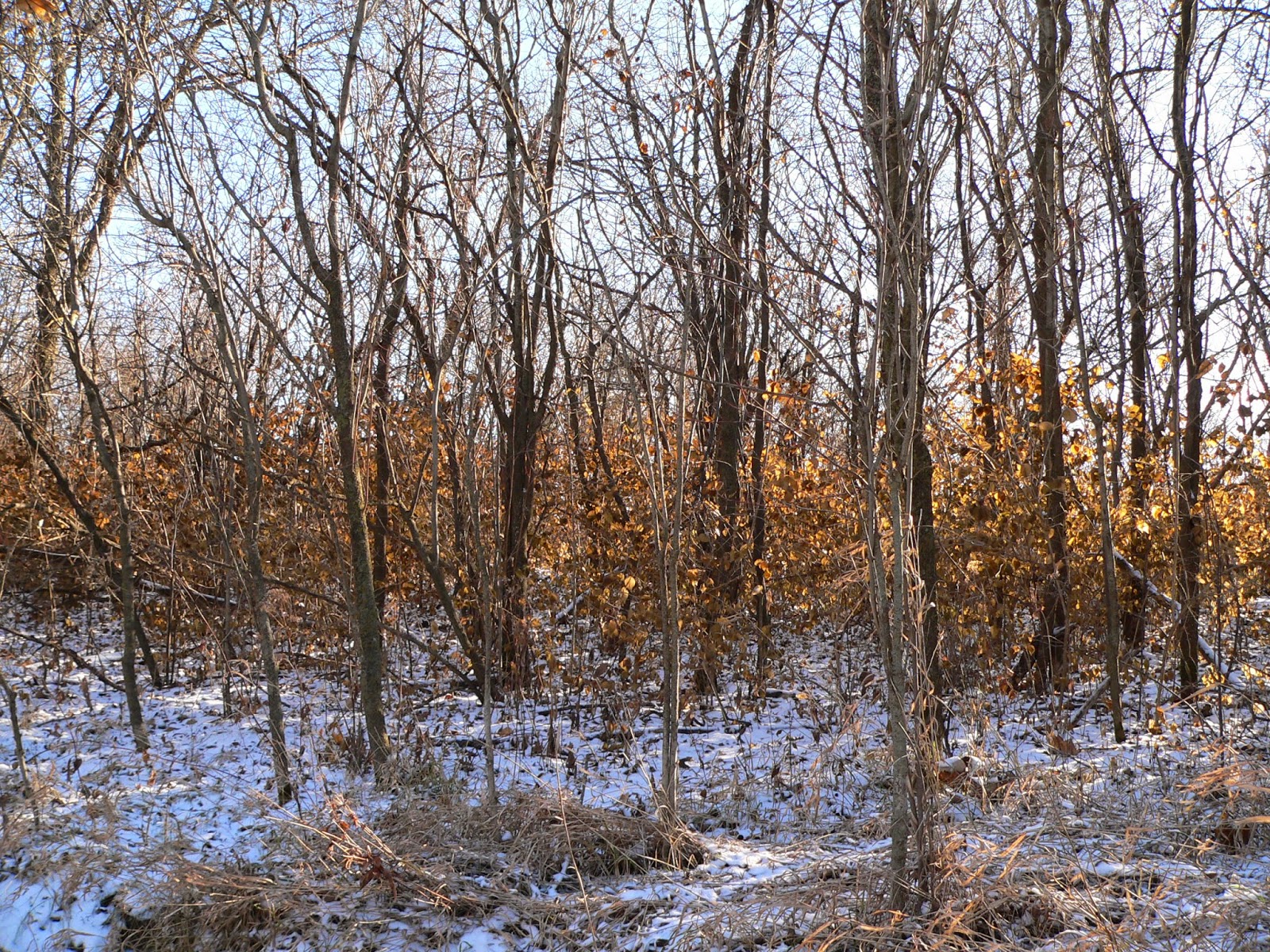
But why are these exotics so bad? Bush honeysuckle leaf out earlier in the spring than most natives and keep their leaves longer in the fall. They are also able to spread new shoots from their roots. This allows them to quickly take over a site, forming a dense understory that crowds and shades out native plants. The picture below is an example of what could happen to the whole park if we did nothing to control bush honeysuckle. This picture was taken in an area that has been left undisturbed for several years.


Exotic bush honeysuckle negatively impact habitats by decreasing light availability and out competing natives for moisture and nutrients. It is also believed that they release toxic chemicals in the soil that prevent other plants from growing in the area. Birds do eat the berries, but unlike native plants, the fruits of exotic bush honeysuckle lack the fat content needed for long flights.

To combat a honeysuckle takeover, the method we most commonly use at Stone Park is to cut the plants off close to the roots and to apply a herbicide that will kill the plant and keep it from sprouting new shoots. We use dye in the herbicide so that we can easily see what has been sprayed. If you walk through the park and see small stumps that are pink or blue you will know that our team has been there recently, continuing the battle.

As we go through the day cutting and treating stumps we get quite a large collection of dead honeysuckle bushes. Admittedly the task gets to be a bit mundane after a few hours. One way we entertain ourselves is to try to think of things we could do to turn these unsightly piles into something useful. We have discussed several things including honeysuckle privacy screens, weaved honeysuckle baskets, and honeysuckle wreaths. Last week I was feeling particularly crafty and decided to try my hand at honeysuckle wreath making. With a bit of patience and some trial-and-error I was able to make the wreath you see below. It is nowhere near perfect and not yet complete, but I admit that it feels good to turn our piles of destruction into something a bit more pleasing to the eye.


Shaena Howell, Americorp team member

Sunday, August 24, 2014


Upcoming Friends of Stone Park Events:

VOLUNTEER TO WORK ON TRAILS
Thursday, Sept. 11, 2014, 6-8:00 PM
Meet at Pammel Valley Shelter (at the end of Pammel Rd.)
Wear your boots and work gloves - tools & treats provided.
Work on Ruth's Ridge trail


BROKEN TOE TRAIL RUN/WALK

Saturday October 4th, 2014

The race is approximately a 4 mile run for individuals and families to promote health, fitness, and appreciation of natural resources in Siouxland. A 2 mile alternate will also be available for walkers. Any proceeds from the race will benefit the Friends of Stone Park for park improvements.

8:30AM - 9:30AM • Registration/Check-in Stone Park Pammel Valley Picnic Area

10:00AM • Run/Walk Starts & 11:15AM • Awards Ceremony and Refreshments

Register online at www.getmeregistered.com or Registration forms online at www.missouririverrunners.com


PRAIRIE SEED HARVEST

Thursday, Oct. 14th, 2014, 5:30 - 7:00 PM

Meet at the parking area on Buffalo Ridge Rd. across from the Park Office.

Wear your boots and gloves and help the Park Ranger collect seed for a later restoration planting.


Saturday, July 5, 2014

Fun at Mayhem for a Great Cause!

Thank you to all Mayhem participants, sponsors, and volunteers for making Mayhem 2014 a success!  Proceeds from the event benefit St. Luke's Children's Miracle Network and the Friends of Stone Park.


Saturday, May 24, 2014

Sign Up For Mayhem!

This year's Mayhem is June 28th.  From beginners to hardcore Mayhem Seekers, there's something for everyone in this extreme obstacle course!  Even the young ones will enjoy the Mini-Mayhem.

Stone Park is the perfect location for this 3 mile course.  Each obstacle will test your toughness, durability and willingness to get dirty all while raising funds and awareness for St. Luke's Children's Miracle Network and the Friends of Stone Park.

Get details and register at - facebook.com/StLukesCMN.  Volunteers are needed to help with Mayhem -sign up on facebook, or call (712)279-3900.

Mini Mayhem Pint-Sized Primer is June 13, Friday 5-7PM at Scheels, 4400 Sergeant Rd. #54, Sioux City, IA.  Kids can try out some obstacles similar to those found at the real Mini-Mayhem at Stone State Park.

Friday, April 25, 2014

Nature Photography Workshop at Stone State Park


Free Nature Photography Workshop


Are you an amateur nature photographer who wants to improve your skills?  Friends of Stone Park is pleased to announce a free photography workshop designed for anyone who wants both to learn the "how-to's" of nature photography and to enjoy a morning in beautiful Stone State Park, 5001 Talbot Road, Sioux City, IA.   On Saturday, May 10th, at 9:30 a.m., Michael Crowley, Associate Professor of Visual Communications in the Digital Media Department at Briar Cliff University since 1989, will provide a short introduction on the fine points of nature photography; and then you will have the opportunity to wander through the park to find the hidden gems waiting to be captured on anything you have that will take digital pictures:  your cell phone, camera, tablet, etc.  Participants will reconvene by late morning to discuss their images with Michael.  Meet at the Pammel Valley Shelter in Stone Park by 9:30 for this informative workshop.  In case of weather concerns on May 10th, please call Kevin Pape, Park Ranger, at 712-255-4698.

Friday, April 4, 2014

Spring Snow Blankets the Park.

Could this be the last snow before the park roads are expected to open on April 15th?  The sign is obscured by snow but Stone Park is on the Loess Hills National Scenic By-Way.

On May 1st the park's cabins and lodge will open for the season.  The cabins rent for $35 per night and can be rented between May 1 and Oct. 15 each year.
Park staff have several downed tree limbs and small trees to cut up along the roads and trails.
A very sturdy new trail bridge blanketed with snow.  The bridge was built and installed last fall thanks to the generosity of  Alex Uhl and his team.

Tuesday, March 4, 2014

How Old Are the Oak Trees in Stone Park?


Have you ever marveled at a large tree in Stone Park and wondered how old that tree could be?  Scientists can determine the answer to that question through dendrochronology.  Dendrochronology is the analysis of growth rings in trees to determine a tree’s age.  Scientists can also determine past climate patterns by studying the rings.

Bur Oaks are one of the more common species in Stone Park.  Oaks are slow-growing and long-lived trees that are a favorite for tree ring analysis.  In the 1990’s several Bur Oak trees in Stone Park were sampled by researchers from Rapid City, South Dakota.*

The oldest tree sampled at the park began life in 1796.  Perhaps there is an older tree out there that has not been sampled – after all, only 14 trees were sampled out of thousands.  You are encouraged to get out and explore the park to find some of the old growth oaks.

Most of the trees sampled in this study were in South Dakota and North Dakota.  The researchers found a pine in the central Black Hills that dated to 1281.  To read the entire study, go to:


*DENDROCLIMATIC POTENTIAL IN THE NORTHERN GREAT PLAINS
CAROLYN HULL SIEG, DAVID MEKO,ARTHUR T. DeGAETANO and WANMEI NI

Thursday, February 27, 2014

Keep Stone Park Beautiful!

Stone Park is one of the area's beautiful places to visit.  The natural scenery includes native wildflowers, old twisted trees, abundant wildlife, and rolling landscapes.  However, some local residents use the park as their dumping ground.  In 2013, park staff made 15 trips to the landfill after picking up refuse dumped in the park.  Local residents dumped furniture, tires, televisions, clothing, box-springs, and other unwanted stuff around the park.

The park staff should be spending their time improving the park rather than properly disposing of refuse brought to the park by unethical visitors.  The cost of disposing of trash comes out of a very limited park budget.

In addition to the "big stuff", staff and volunteers regularly pick up cans, bottles, and other small litter left behind by visitors.  If it is carried in to the park, make sure to carry it out and properly dispose of it.


You can help in several ways:
1)  Report people throwing litter or illegally dumping to local law enforcement or call 1.888.NOLITTR.  Provide specific information describing the individuals with vehicle license plates and time/date.
2) Teach your children and grandchildren the importance of properly disposing of trash and recycling products.
3)  Join the Friends of Stone Park on Apr. 12, 2014, 10:00 AM until 12:00 PM at the entrance to the Dorothy Pecaut Nature Center for their annual roadside clean-up of Highway 12.
4)  Visit this website for more information:  http://www.keepiowabeautiful.com/


Thursday, December 19, 2013

Volunteers Improve Fish Habitat

If you like to fish, you might try Turtle Lake at Stone State Park.  Several people volunteered their time to make fishing better this year.

For his Eagle Scout project, boy scout Greg Anderson made several improvements this past summer.

In this photo Anderson (on the left) gets ready to sink fish habitat in the lake.  Anderson and other scouts constructed the habitat on shore.  The structure was loaded onto the flat-bottom boat and sunk off shore.  Fish are attracted to the artificial structure.

Anderson also installed a new informational kiosk near the parking area which describes the fish that you might catch in Turtle Lake.  A bench was also installed near the lake by scouts.
 
Although there is ice on the lake now, get out and drill a couple of holes and fish over the new structure - you are almost guaranteed a bite!